Engine Carbon Cleaning

Understanding Your Car Belt – Types, Functions, and Maintenance

The car belt is a crucial component. It is responsible for transferring power from the engine to other parts of your car. There are also many different types of car belts—each with their own function and importance. 

Here’s everything you need to know about your car belt and why maintenance is important:


What Does a Car Belt Do? 

A car belt transfers mechanical power from the engine to essential parts of the car. This includes the alternator, water pump, power steering system and air conditioning unit. Without it, your car could quickly overheat and break down. 

Most modern cars require two primary belts: a timing belt and a serpentine belt. There are also secondary belts which we will explain in more detail.

Types of Car Belts

Primary Car Belt

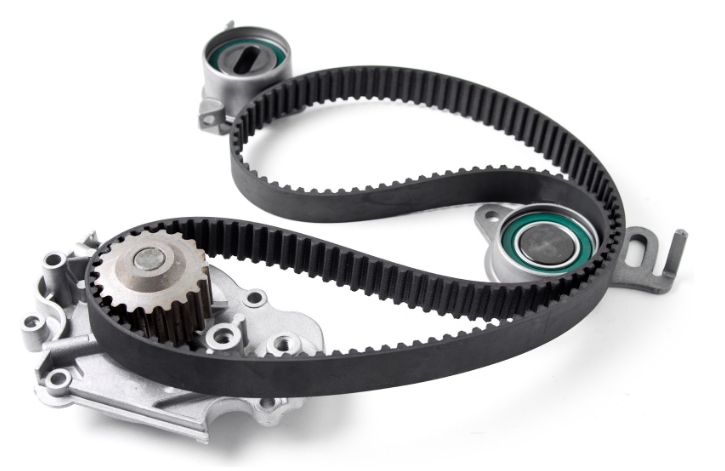
  • Timing Belt: Also called the camshaft belt, the timing belt synchronises the rotation of the crankshaft and camshaft. This keeps the engine’s valves opening and closing at the right time during each cylinder’s intake and exhaust stroke.
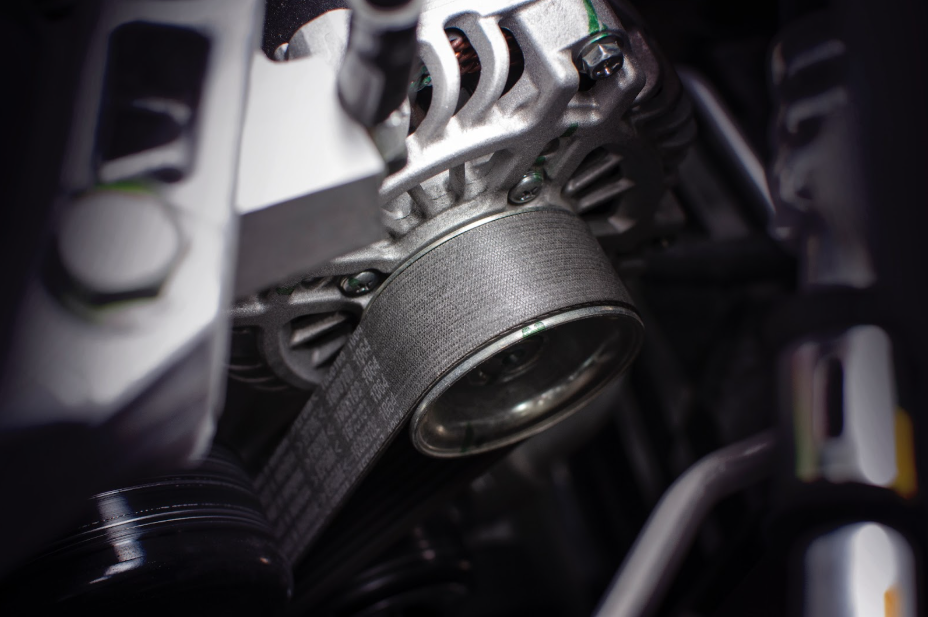
  • Serpentine Belt: The serpentine belt is a single, continuous belt that powers multiple components in your car. This includes the alternator, AC compressor, power steering pump and water pump. It’s common in modern vehicles due to its efficiency and simplicity.

Secondary Car Belt 

  • Drive Belt/ V-Belt: Older cars may have multiple V-belts—each driving a specific accessory. While not as common today, they still exist in some models. Drive belts are essential for powering accessories like the fan and alternator.
  • Fan Belt: The fan belt drives the engine’s cooling fan and is often part of the serpentine system or a standalone belt in older vehicles.
  • Power Steering Belt: In some vehicles, the belt is dedicated to powering the power steering system. If it fails, you’ll find it harder to steer, especially at low speeds. 
  • AC Belt: The air conditioning belt powers the AC compressor. This helps the system work efficiently throughout the day. 

Key Components in a Car Belt 

Car belts don’t work alone. They consist of various components that help maintain tension and guide rotation:

  • The crankshaft pulley drives the belt system from engine torque. 
  • The camshaft works with the timing belt to regulate engine valve movement. 
  • The water pump circulates coolant to prevent overheating. 
  • The idler pulley and tensioner pulley keep proper tension and alignment.
  • The belt routing diagram shows how the belt should be fitted around the pulley.

Common Issues to Look Out For

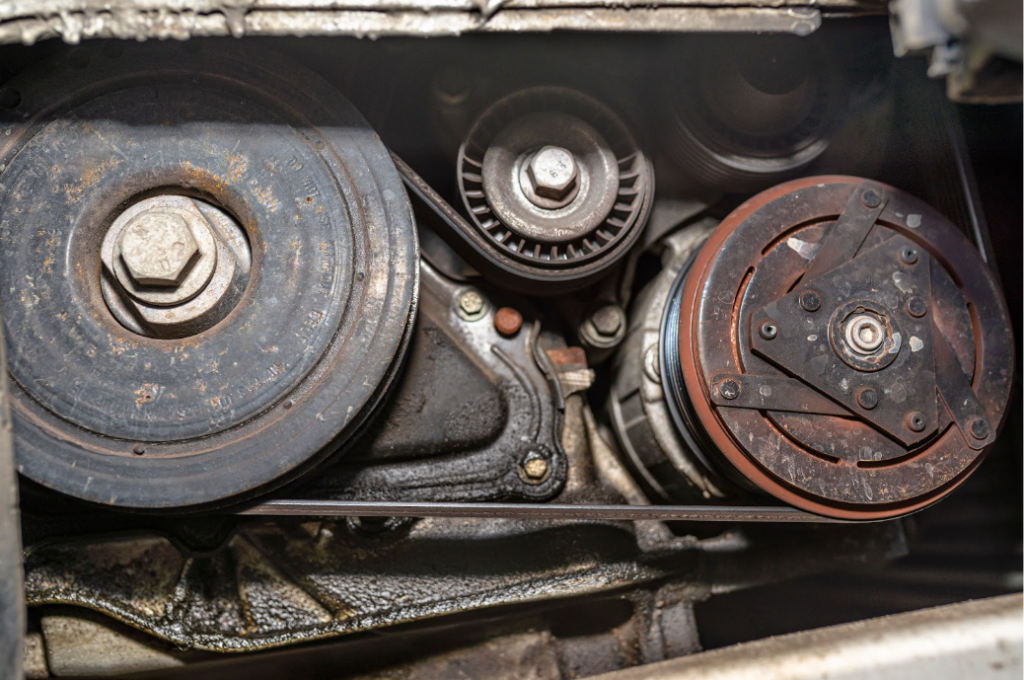
A rusty car belt
  • Belt Slipping or Squealing: Keep an ear out for a high-pitched squeal when you start the engine or turn on the air-con. This usually happens when the belt is loose, worn out or misaligned. It affects how well your car’s systems perform and can speed up wear on other parts like pulleys and bearings.
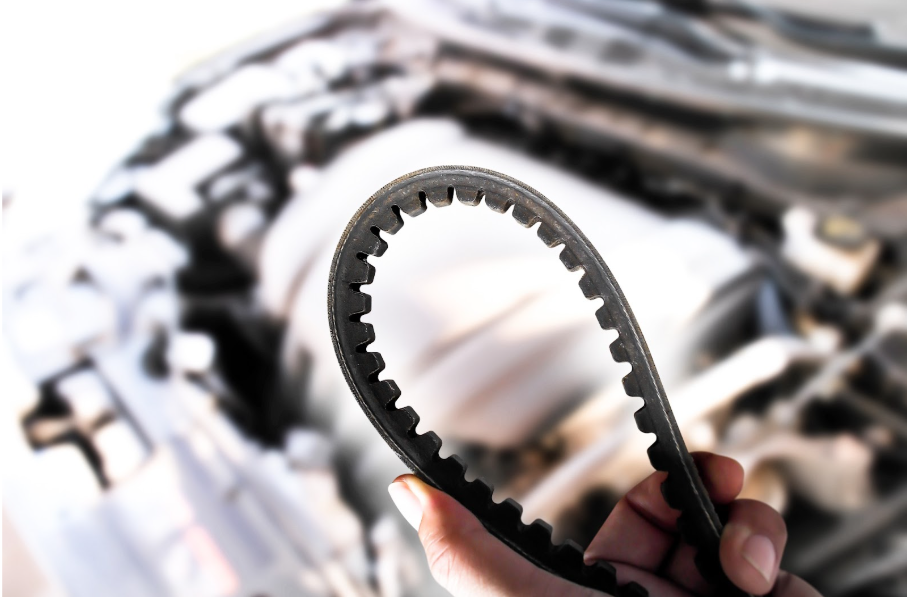
  • Cracks, Fraying or Grazing: Belts are made of rubber-based materials that naturally wear out over time. Constant exposure to engine heat and friction might cause wear. This includes cracks, fraying or a shiny, polished surface known as glazing. These are clear signs that it’s time for a replacement. 
  • Engine Overheating: Your water pump is driven by either the timing belt or serpentine belt. If the belt fails, the water pump stops circulating coolant, and your engine can quickly overheat. This is a serious issue that can lead to engine damage if ignored. Always monitor your engine temperature gauge, especially during hotter days. 
  • Check Engine Light: The check engine light can be triggered by many things—including a faulty belt system. For example, if the timing belt skips a tooth, it could affect engine timing and cause performance issues. While not always belt-related, a persistent check engine light should never be ignored.
  • Unusual Vibrations or Engine Misfire: A worn or loose belt can cause the engine to vibrate or misfire. This happens when the timing belt loses sync with the camshaft and crankshaft. It may feel like the engine is running rough, especially during acceleration or idle.

Car Belt Maintenance Tips

When it comes to maintenance, there’s nothing you can do besides regular checks and replacements. Belts aren’t like engine oil you can top up—they either work or they don’t. Once worn, stretched or cracked, they need to be swapped out entirely. 

That’s why regular inspection is crucial, especially if your car is older or has higher mileage. Keep a look out for any damage or signs of wear, and remember to listen for high-pitched noises too. 

Belts should also have the right amount of tension—too loose and they wont grip, too tight and they can wear out. Look out for leaks as oil or coolant can damage rubber belts quickly, and make sure your engine bay stays clean and dry. 


When Should You Replace a Car Belt? 

Don’t wait for problems to arise before replacing your car belt. It’s best to follow your vehicle’s scheduled service intervals as a guideline. This typically falls between 60,000 to 100,000 kilometres for a timing belt and 70,000 for serpentine belts. 

If you notice wear symptoms early on (like slipping or noise), get it checked during your next preventive maintenance check-up. A visit to a trusted car repair shop can help avoid more expensive engine damage. 

All in all, replacing your car belt on time, will help you enjoy a smoother, safer drive every time. 

Contact us to find out more!

  • All Posts
  • Car Workshop Tips
  • Uncategorized
Load More

End of Content.